Rudraksha Care: How to Clean, Oil and Store Your Beads
Rudraksha Advisor team · 5 min read
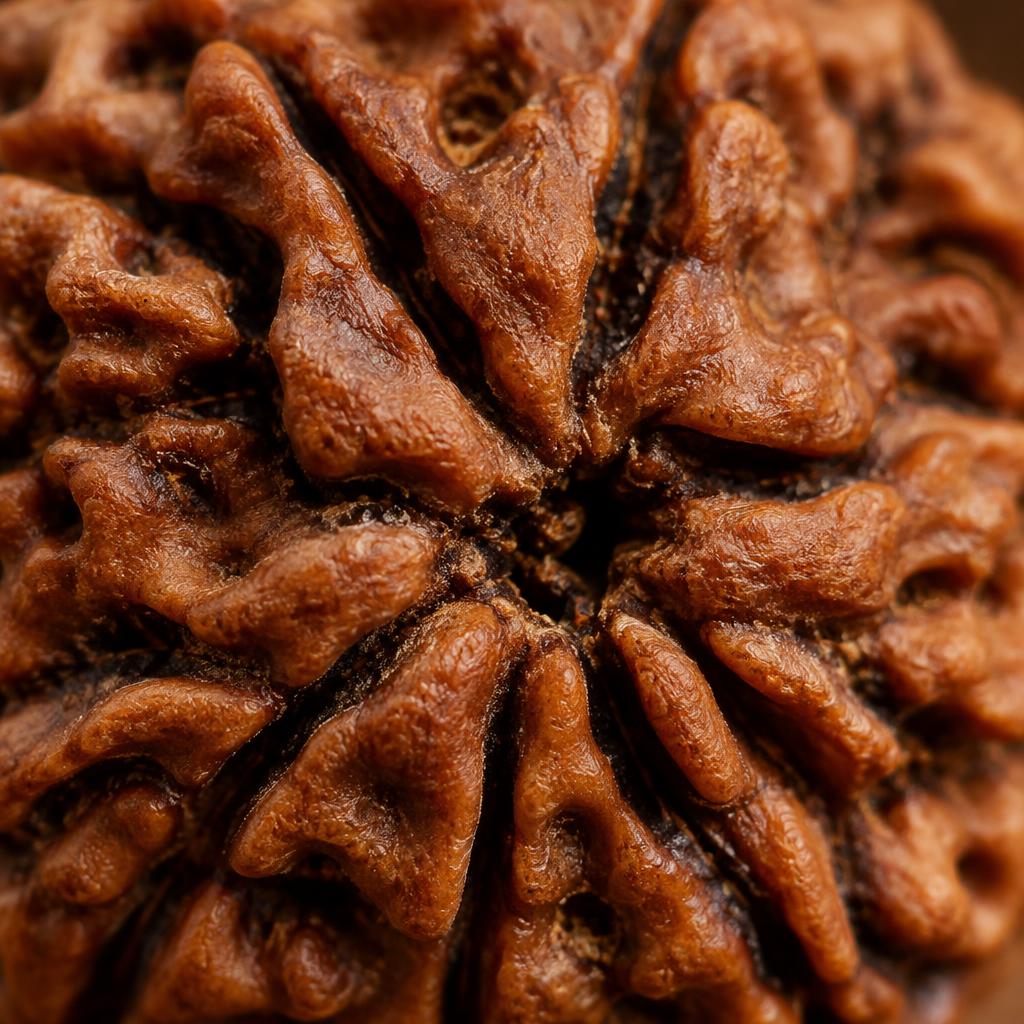
Rudraksha is a natural seed, and like wood it responds to moisture, dryness, sweat and handling. With simple care, a genuine bead can last for decades and often becomes richer in colour over time. Without care, beads can dry out, crack, or collect dirt in their grooves. This guide explains safe cleaning, oiling and storage methods that suit both single beads and malas.
Why Rudraksha needs care
The deep grooves and protrusions on a Rudraksha bead naturally collect dust, sweat and skin oils. Over time this can dull the bead and, if moisture remains trapped, encourage damage. Very dry conditions can make beads brittle. Regular, gentle care keeps the bead clean and helps prevent cracks.
Gentle cleaning step by step
Clean your bead every few weeks if you wear it daily, or whenever it looks dull:
- Soak the bead or mala in lukewarm clean water for a few minutes — not hours.
- Use a soft toothbrush to gently clean the grooves. Do not scrub hard.
- Rinse with clean water. Avoid soap, detergent or chemical cleaners.
- Pat dry with a soft cotton cloth and let it air-dry fully in shade, not direct sun.
Oiling your Rudraksha
Once the bead is completely dry, apply a small amount of natural oil with a soft brush or your fingers. Sandalwood oil, sesame (til) oil and mustard oil are traditionally used. Let the bead absorb the oil for several hours or overnight, then wipe away any excess with a cloth so it does not feel sticky. Many people oil beads once every one to three months, more often in dry climates.
Avoid perfumed oils with alcohol, and do not over-oil. Too much oil can attract dust and leave a residue on clothing.
Caring for malas and threads
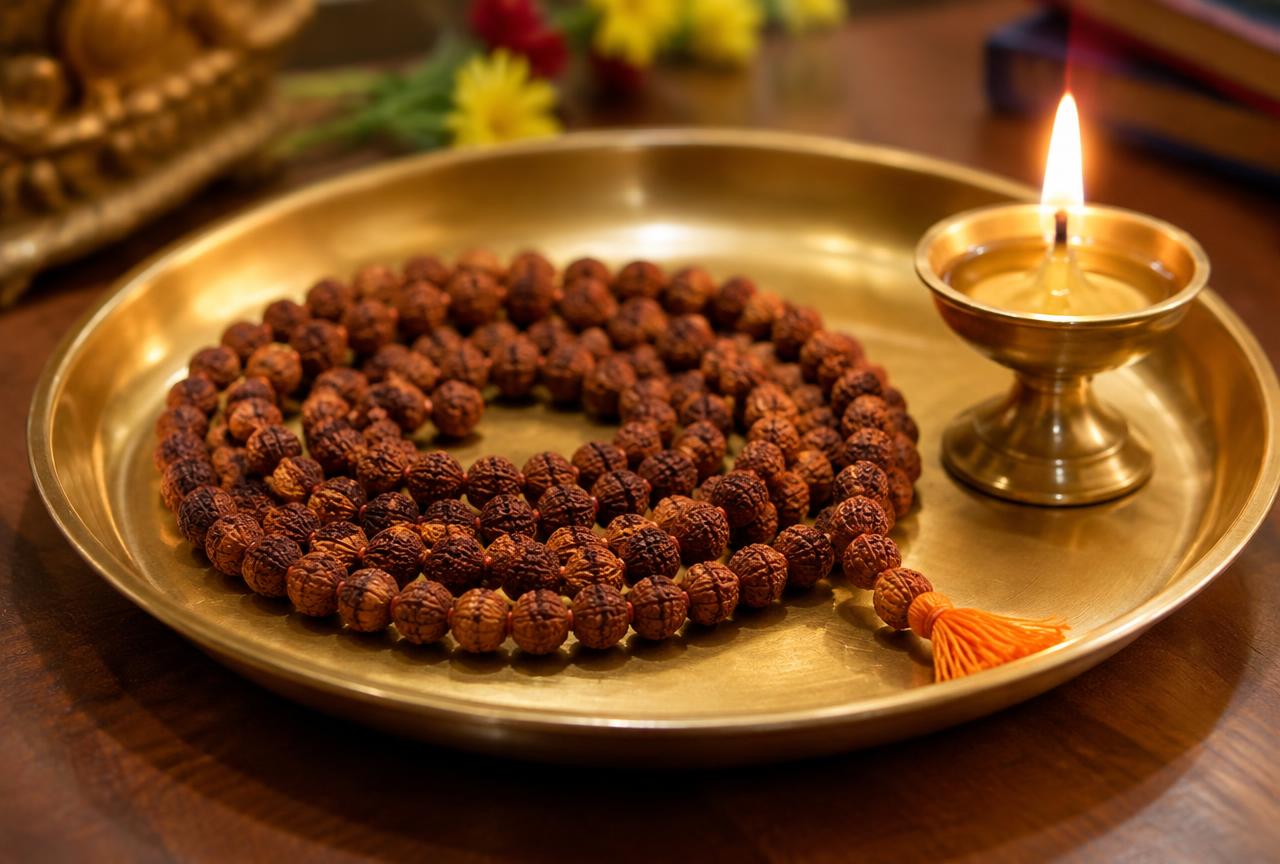
Mala threads wear out with regular use. Check the knots between beads and the main tassel every few months. If the thread looks thin or frayed, have the mala restrung before it breaks. Cotton and silk threads are traditional; some prefer stronger synthetic threads for daily wear. When restringing, keep the Meru bead in place and maintain the original number of beads.
Silver and gold capped beads
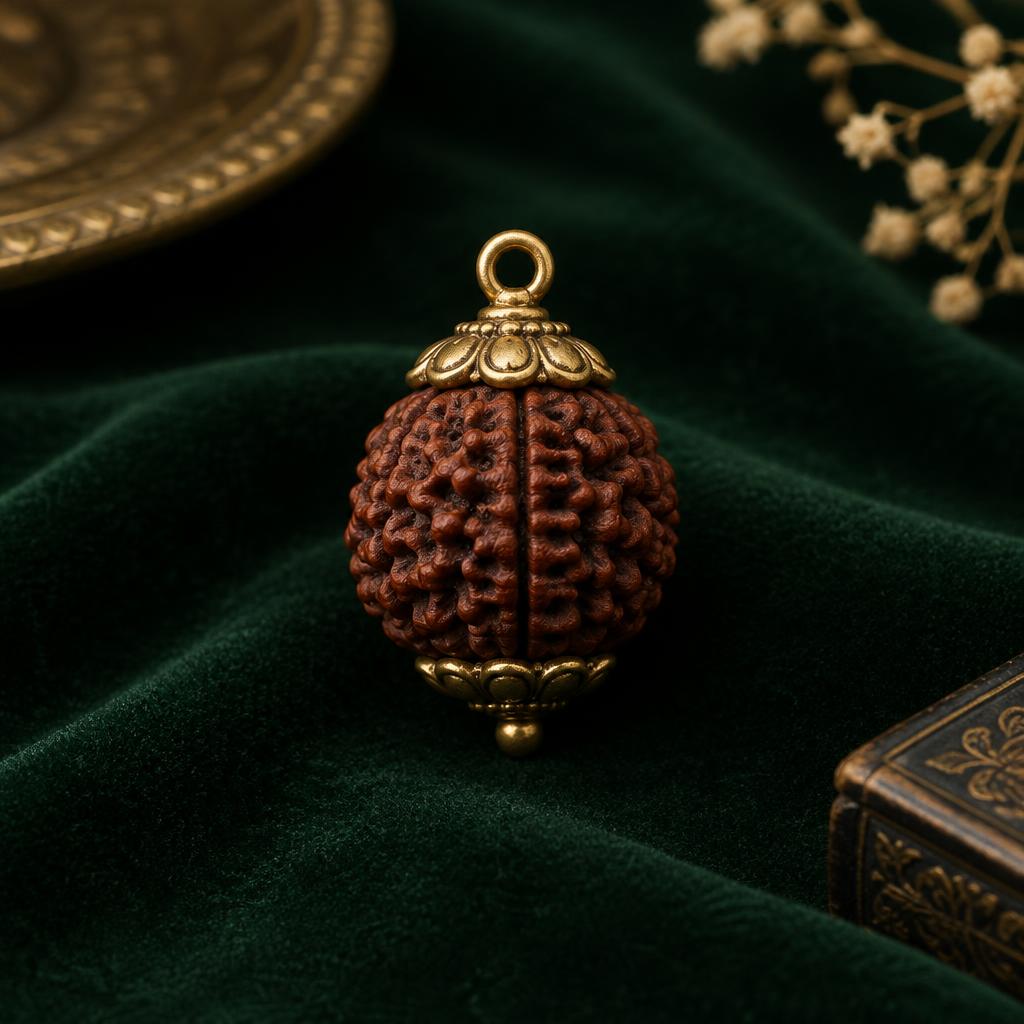
For capped beads, clean the bead itself gently with a soft brush and water and avoid soaking the metal for long periods. Metal can be polished separately with a suitable jeweller's cloth. Avoid silver dips or harsh polish near the bead, as chemicals can damage it.
Storing your beads
When not worn, keep your Rudraksha in a clean cloth pouch or wooden box in your puja space or another respectful place. Avoid airtight plastic bags, which can trap moisture, and keep beads away from direct sunlight, heaters and damp areas. Store higher-value beads separately so they are not scratched by other jewellery.
Mistakes to avoid
These common habits can shorten the life of a bead:
- Boiling the bead to 'test' it or clean it.
- Using soap, shampoo, sanitiser or chemical cleaners.
- Leaving the bead wet after bathing or swimming.
- Drying it under strong direct sunlight for long periods.
- Applying heavy, perfumed or synthetic oils.
When a bead is damaged
If you notice a crack, insect hole or loose cap, stop wearing the bead and keep it safe. Small cosmetic issues may not matter in tradition, but significant damage can worsen with use. You can send clear photos to our team on WhatsApp for a quick opinion on whether the bead can be repaired, recapped or should be kept on the altar instead.
With a little regular attention, your Rudraksha can remain a beautiful and meaningful companion for many years.
Frequently asked questions
How often should I oil my Rudraksha?
For beads worn daily, oiling every one to three months is common. In very dry weather or air-conditioned environments, you may need to oil more often. If the bead looks pale or feels dry and rough, it is usually time for a light coat of oil.
Which oil is best for Rudraksha?
Sandalwood, sesame (til) and mustard oil are traditionally used. Pure, natural oils without added alcohol or synthetic fragrance are preferred. Apply only a thin layer and wipe away any excess so the bead does not become sticky.
Why has my Rudraksha changed colour?
Natural beads often darken gradually with oiling, handling and age. This is normal and is often considered a sign of a well-used bead. A sudden, patchy colour change or colour rubbing off onto skin may indicate dye, which you can ask our team about.
Can I use an ultrasonic jewellery cleaner?
It is not recommended. Ultrasonic cleaners and chemical solutions can damage the natural structure of the bead and weaken any glue used in capping. Gentle water, a soft brush and natural oil are the safest methods.
This article describes traditional beliefs for educational purposes. Rudraksha is not a substitute for medical, legal or financial advice, and no outcome is guaranteed.
Beads mentioned in this article
 5 MukhiRepresentative image
5 Mukhi Rudraksha
Nepal origin · 17mm – 22mm
Traditionally associated with general wellbeing and daily practice and japa.
₹769
 7 MukhiRepresentative image
7 Mukhi Rudraksha
Nepal origin · 17mm – 22mm
Traditionally associated with financial discipline and prosperity traditions.
₹1,429
9 MukhiRepresentative image9 Mukhi Rudraksha
Nepal origin · 17mm – 22mm
Traditionally associated with courage and inner strength.
₹10,999
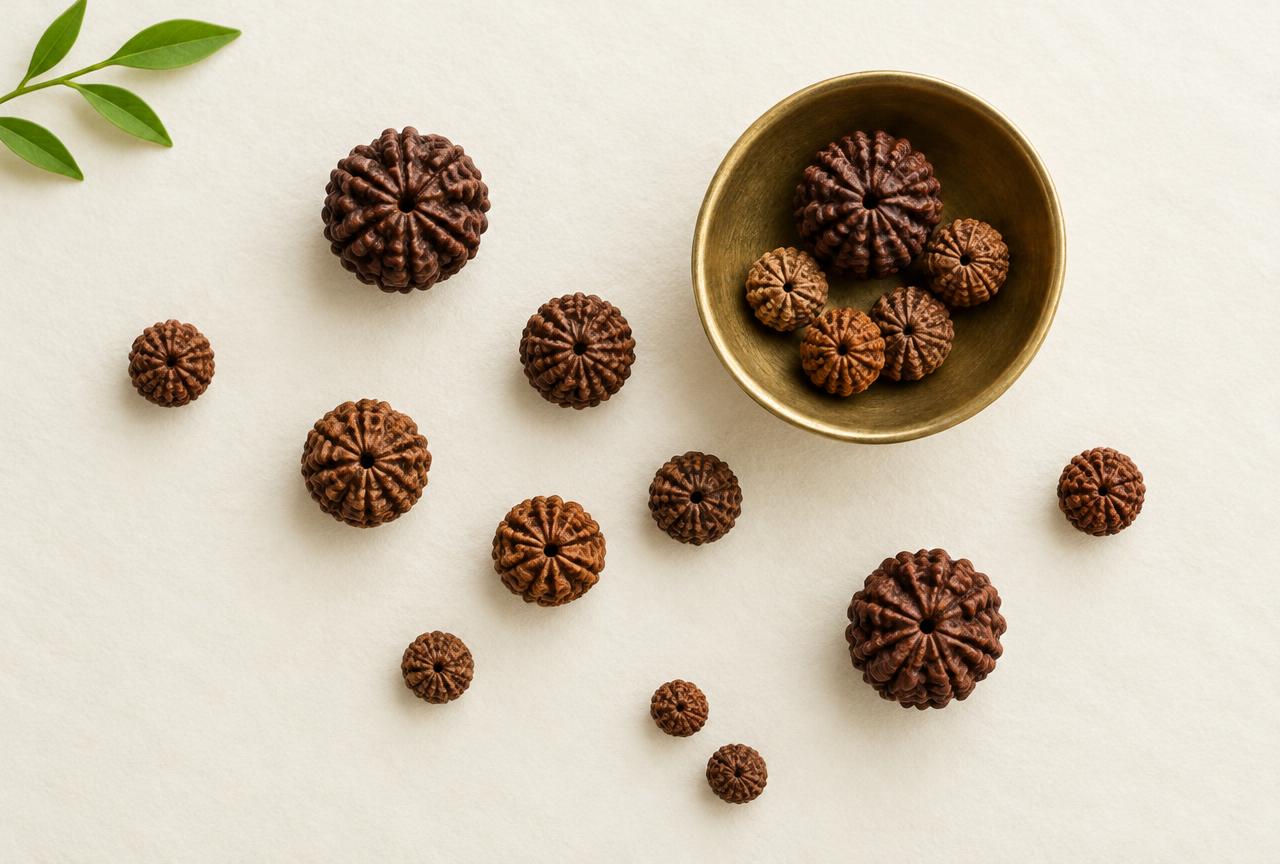 10 MukhiRepresentative image
10 Mukhi Rudraksha
Nepal origin · 17mm – 22mm
Traditionally associated with protection traditions and peace at home.
₹10,944
Keep reading
How to Choose the Right Rudraksha: A Practical Guide for Beginners
A step-by-step guide to choosing the right Rudraksha by purpose, Mukhi, size, origin and budget — without pressure or false promises.
How to Identify an Original Rudraksha: Authenticity Checks That Actually Help
Learn practical ways to check if a Rudraksha is original — natural Mukhi lines, origin, X-ray reports and seller transparency — and why popular 'tests' mislead.
Nepal vs Indonesian Rudraksha: Differences in Size, Lines and Price
Compare Nepali and Indonesian (Java) Rudraksha by size, Mukhi clarity, weight, price and use — and learn how to choose the right origin for you.