
Rudraksha Mala for Japa: Why 108 Beads and How to Use It
Rudraksha Advisor team · 6 min read
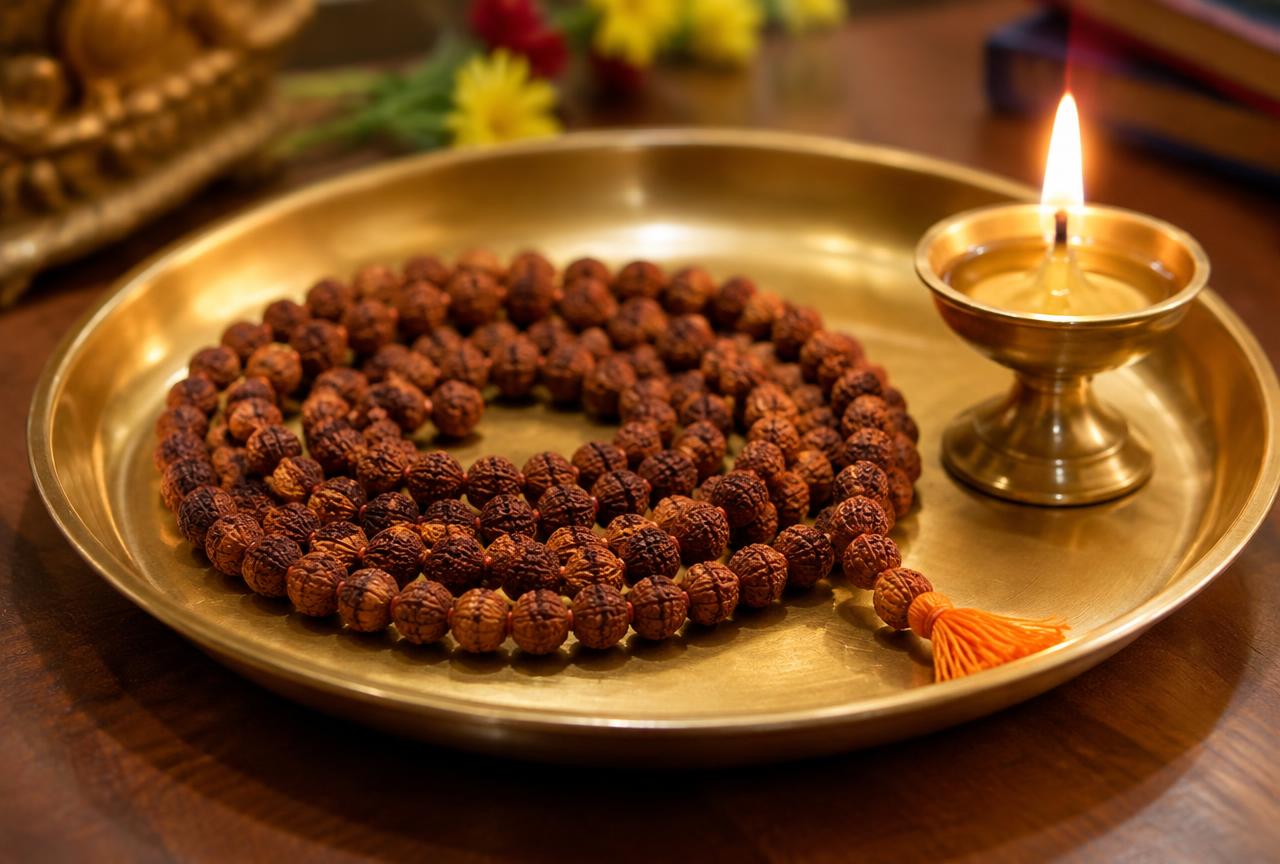
A Rudraksha mala is one of the oldest and most beloved tools for japa, the repeated chanting of a mantra. Holding a mala keeps count, steadies the mind and creates a gentle rhythm for practice. Whether you are new to chanting or have practised for years, understanding the structure and use of a mala can make your practice more focused and meaningful.
Why 108 beads?
Most japa malas have 108 beads plus one Meru bead. The number 108 holds special significance across many Indian traditions. Explanations vary: some relate it to astronomy, noting relationships between the sun, moon and earth; others connect it to the 108 Upanishads, the 108 names of deities, or the 12 zodiac signs multiplied by the 9 planets of Vedic astrology. Whatever the explanation, 108 is widely considered a complete and auspicious count for a round of japa.
Smaller malas of 54 or 27 beads are also used, meaning two or four rounds complete a count of 108. These are lighter and easier to carry or wear.
The Meru bead
The Meru or Sumeru bead is a slightly larger or distinct bead, often with a tassel, that marks the start and end of the mala. During japa, you do not cross over the Meru. When you reach it after a full round, you turn the mala around and continue in the opposite direction. The Meru is traditionally treated as a point of respect, representing the guru or the highest aim of practice.
How to use a mala for chanting
A commonly taught method is:
- Sit comfortably in a quiet place, with your spine upright.
- Hold the mala in your right hand, draped over the middle or ring finger.
- Begin at the bead next to the Meru. Use your thumb to move one bead towards you with each repetition of the mantra.
- Traditionally, the index finger, associated with ego, is kept away from the mala.
- On reaching the Meru, turn the mala and begin the next round without crossing it.
Choosing a mantra
'Om Namah Shivaya' is the mantra most commonly chanted with a Rudraksha mala. Others chant the Mahamrityunjaya mantra, the Gayatri mantra, or a mantra given by their guru. If you have received a mantra through initiation, use that one. Consistency matters more than variety; many teachers suggest chanting at the same time each day.
Choosing the right mala
Most japa malas are made from 5 Mukhi beads because they are abundant and considered suitable for everyone. Bead size affects comfort: smaller beads (around 5–8 mm) are light and easy to move quickly, while larger beads (10 mm and above) feel substantial and slower. Check that the beads are evenly sized, genuinely Rudraksha, and knotted between each bead so they do not rub against one another.
Wearing vs chanting mala
Some practitioners keep a separate mala exclusively for japa and do not wear it, believing it holds the energy of their practice. Others wear the same mala throughout the day. Both approaches exist in tradition. If you do wear your japa mala, keep it clean and treat it with the same respect you would during practice.
Caring for your mala
Clean the mala occasionally with lukewarm water and a soft brush, dry it fully, and oil lightly with sandalwood or sesame oil. Check the thread regularly and restring when it becomes thin. Store the mala in a cloth pouch in your puja space when not in use.
Starting your practice
Begin with one round of 108 each day, at a time you can keep consistently. Over time, many people find that the touch of the beads and the rhythm of the mantra naturally settle the mind. If you would like help choosing a mala size, bead origin or combination suited to your practice, you can ask our team on WhatsApp or through a consultation request.
Frequently asked questions
Can I wear my japa mala?
Yes, many people do. Some traditions prefer a separate mala exclusively for chanting so that it remains associated with practice. If you wear your japa mala, keep it clean and handle it respectfully. Both approaches are common and accepted.
What size beads are best for a japa mala?
Many practitioners prefer beads between 6 and 8 mm because they move easily between the fingers and the mala stays light. Larger beads around 10 to 12 mm feel substantial and slow down the pace, which some people enjoy. Try what feels natural in your hand.
What if I lose count or the mala breaks?
Losing count occasionally is normal; simply continue calmly. If the mala breaks, collect all the beads, keep them in a clean place, and have them restrung with the same number of beads and the Meru bead in place. Many people see this as a natural part of a mala's life.
How long does one round of 108 take?
It depends on the mantra and your pace. A short mantra like 'Om Namah Shivaya' may take five to ten minutes per round. Longer mantras such as the Mahamrityunjaya mantra take more time. Consistency matters more than speed.
This article describes traditional beliefs for educational purposes. Rudraksha is not a substitute for medical, legal or financial advice, and no outcome is guaranteed.
Beads mentioned in this article
5 MukhiRepresentative image5 Mukhi Rudraksha
Nepal origin · 17mm – 22mm
Traditionally associated with general wellbeing and daily practice and japa.
₹769
 4 MukhiRepresentative image
4 Mukhi Rudraksha
Nepal origin · 17mm – 22mm
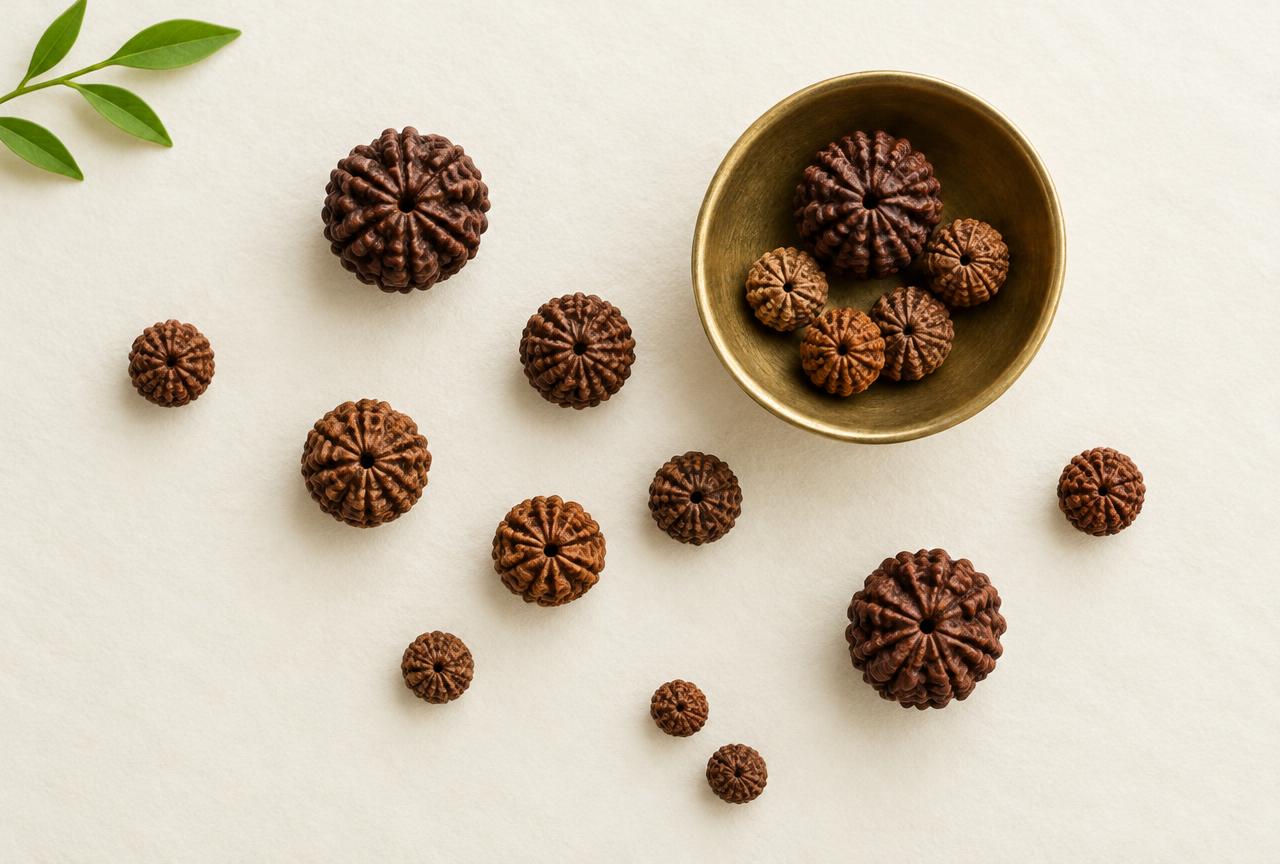
Traditionally associated with study and communication and creativity.
₹989
 6 MukhiRepresentative image
6 Mukhi Rudraksha
Nepal origin · 17mm – 22mm
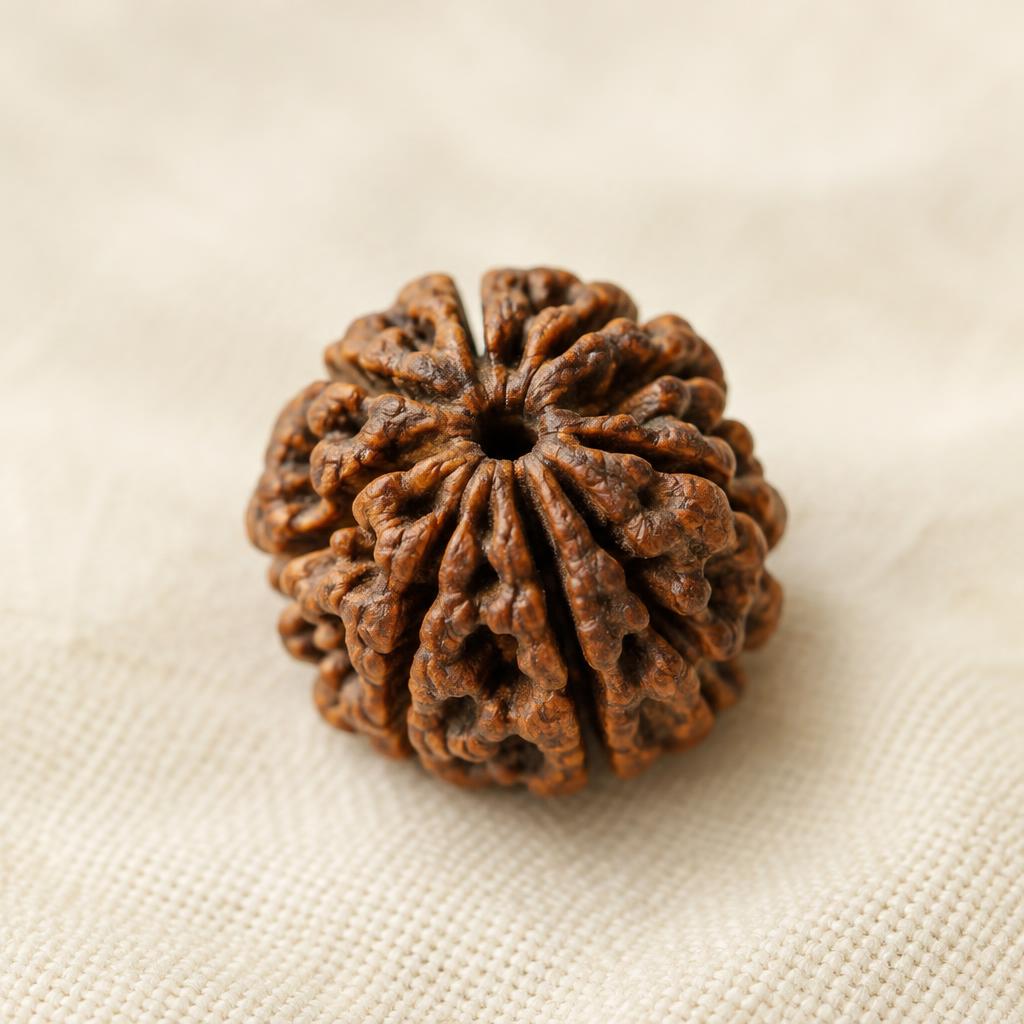
Traditionally associated with discipline and steadiness.
₹879
11 MukhiRepresentative image11 Mukhi Rudraksha
Nepal origin · 17mm – 22mm
Traditionally associated with fearlessness and devotion.
₹13,199
Keep reading
How to Choose the Right Rudraksha: A Practical Guide for Beginners
A step-by-step guide to choosing the right Rudraksha by purpose, Mukhi, size, origin and budget — without pressure or false promises.
How to Identify an Original Rudraksha: Authenticity Checks That Actually Help
Learn practical ways to check if a Rudraksha is original — natural Mukhi lines, origin, X-ray reports and seller transparency — and why popular 'tests' mislead.
Nepal vs Indonesian Rudraksha: Differences in Size, Lines and Price
Compare Nepali and Indonesian (Java) Rudraksha by size, Mukhi clarity, weight, price and use — and learn how to choose the right origin for you.